Earlier this month, the Infrastructure and Transport Ministers released the first annual progress report for the National Freight and Supply Chain Strategy. From an ocean-shipping perspective, it’s a bit of a disappointing read.
Initial remarks positive then it heads downhill
The National Freight Strategy Annual Report notes that international ocean shipping has recovered quickly after experiencing a modest, initial slowdown caused by COVID-19, with some ports now exceeding 2019 trade volumes.
That ocean-shipping has recovered is a testament to the resilience, flexibility and value-for-money of international shipping.
Domestic shipping
Unfortunately, the annual report begins to lose sight of reality pretty quickly. It discusses domestic shipping under the Commonwealth’s Coastal Trading System. Discussion of numbers up down by X per cent is pretty irrelevant – as the shipping industry pointed out long before the 2012 reforms and ever since those reforms, a protectionist cabotage industry is inefficient and detrimental to economic interests of Australia.
Elsewhere in the report, there are multiple discussions of encouraging “coastal shipping”. The first, and probably only, reform that needs to happen is to have a reform of the Federal legislation.
Shipping Australia particularly takes issue with a conclusion that, because domestic volumes under the coastal system were stable, that “domestic shipping has remained an effective way of moving goods”.
It’s really not.
It could be much better though.
A coastal shipping reform really could revitalize the interests of Australian shippers and cargo owners to the benefit of all. Reform of the Federal legislation is necessary… and overdue. Shipping Australia is pleased to note that consultation for reform is underway.
NSW Empty Container Study
The annual report discusses the Empty Container Supply Chain Study released in May 2020. One goal of the NSW Freight and Ports Plan 2018-2023, according to Transport for New South Wales, is to improve the flow of empty containers into and out of Port Botany. That is a really worthy goal.
Shipping Australia understands that there are more than 10 or so Empty Container Parks in New South Wales. There are also a variety of intermodal terminal businesses that also handle empty containers as part of their business. Yet only two empty container parks actually took part in the study. To improve the flow of empty containers the participation of Empty Container Parks is… utterly vital. Shipping Australia extensively critiqued this report in “NSW empty container park study – further work is needed“, which pretty much summarises the situation.
In terms of the substance, there are numerous issues with management of empty containers and many different parties in the chain have a role to play.
For instance, there are major gate-congestion issues at empty container parks. There are two practices that could be implemented by land transport operators that would help alleviate gate-congestion.
EPCs have booking systems. The idea is that a truck goes through the gate at a time booked in advance of the truck turning up. What actually happens is that the truck arrives at the gate and a booking is then made with the truck sitting outside the gate. Which kind of defeats the point of a vehicle booking system and does not alleviate gate-congestion. Secondly, land transport operators could send some of their trucks to container parks late in the afternoon or in the early evening – but they are loathe to do so.
If land transport operators implemented both solutions then it would likely ease gate-congestion. Not that anyone would know any of this from the annual report of the National Freight Strategy because it’s not mentioned.
Here’s a very simple fact that is overlooked: ocean shipping lines are not responsible for, are not the cause of, and cannot by themselves solve, every single landside empty container management issue.
Pricing issues
The annual report talks of various pricing issues and makes sweeping, generalised and contentious statements about how pricing is “hurting” various parties and is “having a bigger impact on costs”.
We live in a free-market economy. As Shipping Australia has argued elsewhere, if a person wants a company or other person to provide a service to him or her in the ordinary course of business then that person has to pay.
Sometimes prices go up. Sometimes prices go down. Sometimes prices stay the same. Where there are multiple buyers and sellers, if a price changes, or a surcharge is introduced, then the buyer is not forced to pay it. He or she can look for another provider. Buyers can also protect themselves from surcharges by including pass-through clauses in their own contracts and by charging higher rates or increasing their own efficiencies to cope with the changes. If there are issues with cash-flow then it’s time to talk to the bank to get better credit terms.
This is Business 101.
Importance of ocean shipping is not recognised
A final gripe about the National Freight Strategy annual report is that, apart from the odd line here or there, the importance of ocean-going shipping to Australia’s interests is not recognised. There’s only about 20 references to the word “shipping” in the whole report. There are only two references to the word “ocean” … and one of those is referring to the Great Ocean Road.
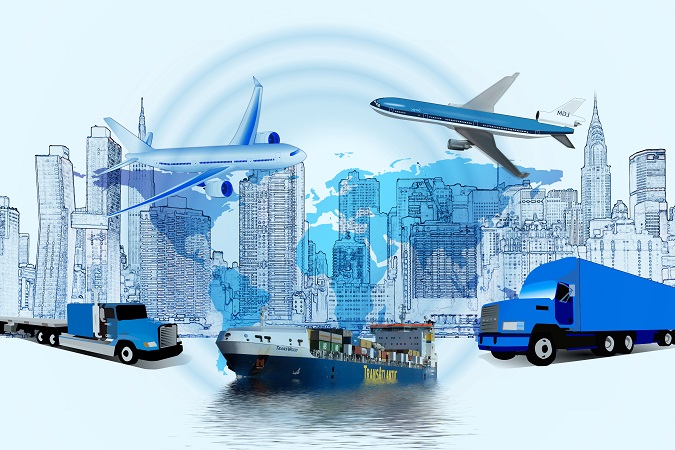
The National Freight Strategy June 2020 factsheet: “Supply Chain by the Numbers” proudly boasts that air freight hauls 1.1 million tonnes of freight with a value of $110 billion.
But there’s no reference to the fact that ocean shipping handles about 1.57 BILLION tonnes of cargo a year with a value of $581.53 BILLION. Against those kinds of numbers, aviation freight by volume is a mere small fraction of one per cent and by value it is five times smaller than maritime.
To put it another way, aviation accounts for about 0.07 per cent by volume and 16 per cent by value of Australia’s international freight whereas maritime accounts for 99.93 per cent by volume of Australia’s international freight and 84 per cent by value.
That’s not to denigrate aviation – it’s an important mode of transport for high value, perishable and physically-small goods.
But it does indicate that, for a country completely surrounded by the sea and utterly dependent on maritime trade, our leaders and officials are remarkably blind to the importance of ocean-going shipping.
Further reading:
NSW empty container park study – further work is needed
Terminal Access Charges – who should pay?
Summary factsheet on the transport of Australian import & export cargoes